Reiki is a soft, non-touch (or light-touch) healing method that helps restore balance to your body, mind, and spirit. It began in Japan in the early 1900s and was founded by Mikao Usui. The word Reiki combines two Japanese words — Rei (universal) and Ki (life energy). This life energy flows through all living things and is essential for health and vitality.
When this energy flows freely, we feel well. But when it’s blocked or low — due to stress, illness, or emotional pain — it can lead to physical or emotional problems. Reiki helps clear these blockages and brings the body’s energy back into balance.
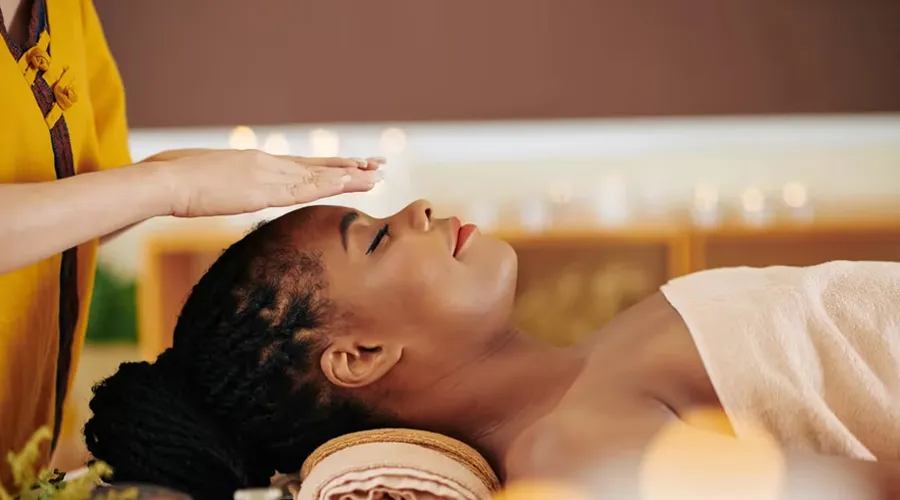
A Reiki session is simple and relaxing. The person receiving Reiki lies down or sits comfortably, fully clothed. The Reiki practitioner gently places their hands on or just above the body to transfer healing energy. There’s no pressure or physical manipulation. Many people feel warmth, a gentle tingling, deep calm, or emotional release during the session.
Reiki works on many levels:
- Physically, it may ease pain, speed up recovery, and boost immunity.
- Emotionally, it helps reduce stress, anxiety, and emotional tension.
- Mentally and spiritually, it brings peace, clarity, and a sense of well-being.
Reiki doesn’t replace medical care, but it’s often used alongside it in hospitals and wellness centers. It’s completely safe and can be used by anyone — children, adults, pregnant women, the elderly, and even those with serious illnesses.
One of Reiki’s most beautiful aspects is that you don’t need to believe in anything for it to work. It’s a universal practice open to everyone. Some people even choose to learn Reiki for their own self-care and spiritual growth.
In short, Reiki is a gentle yet powerful way to relax, heal, and reconnect — offering calmness, energy, and inner peace.